Phytochemical Standardisation and Antimicrobial Effect of Sida rhombifolia Linn. Aerial Parts
DOI:
https://doi.org/10.5530/jams.2017.2.234Keywords:
Aerial parts, antimicrobial, Bala, Sustainable harvestingAbstract
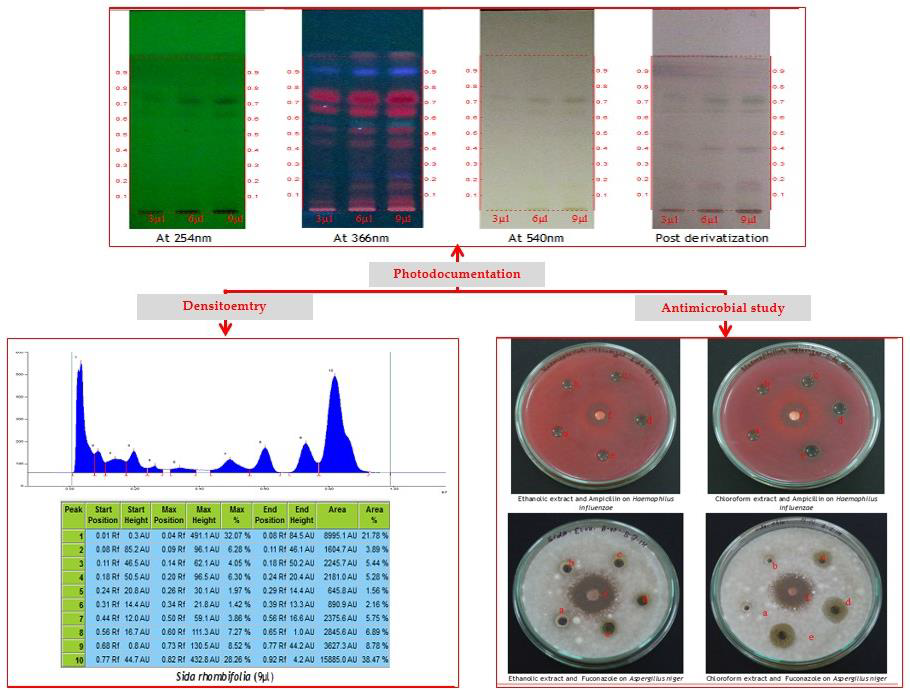
Introduction: Sida rhombifolia belonging to family Malvaceae is widely used in Ayurvedic practice for the treatment of infectious diseases, fever, diarrhea and diuretic. Several bioactive compounds are reported from the plant having medicinal activities. Methods: Standardization has been done to ensure the quality and purity of authentic specimen, Phytochemical test was carried out to explore its phyto-constituents. HPTLC fingerprinting profile was also been carried out. Further the ethanolic and chloroform extract of aerial parts was screened for antibacterial and antifungal activity by Agar well diffusion method. Results: The chloroform extract showed significant antibacterial and antifungal activity when compared to the ethanolic extract. Preliminary phytochemical screening revealed the presence of alkaloids, carbohydrates, tannin and coumarins. Distinct spots are also observed in the HPTLC prints. Conclusion: The present investigation provides useful information on antimicrobial activity of chloroform extract of Sida rhombifolia in treatment of various bacterial and fungal infections.