Clinical evaluation of Beet root and Prickly pear in the management of Anemia: An Observational Study
DOI:
https://doi.org/10.5530/jams.2017.2.30Keywords:
Beet root, Prickly pear, Heamatinic, Anemia, OpuntiaAbstract
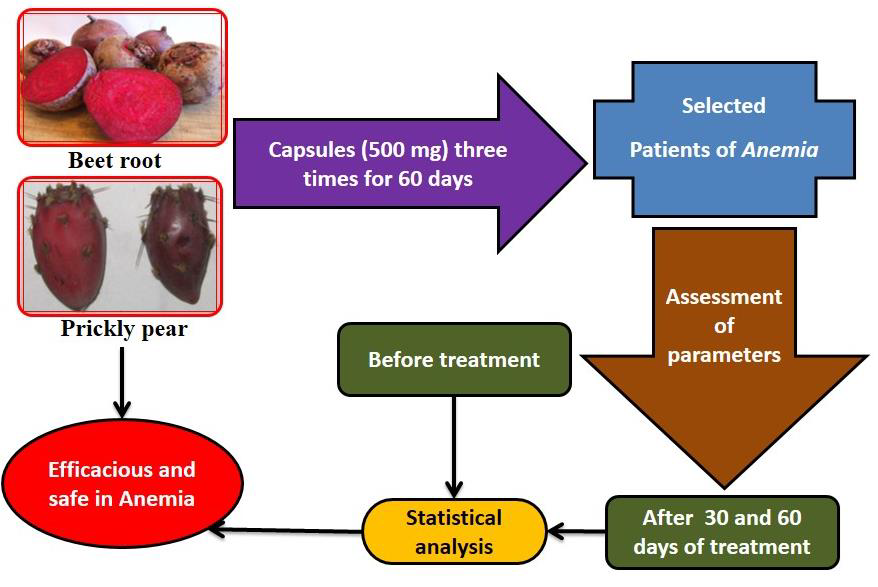
Introduction: In conventional medicine, various forms of iron are commonly prescribed, but these therapies have their noted adverse effects like constipation, gastric discomfort and poor bioavailability. The need is felt for search of safe and effective herbal preparation to improve the hemoglobin level. The aim was to evaluate the clinical efficacy and safety of beet root (Beta vulgaris L. ssp. vulgaris) and prickly pear (Opuntia elatior Mill.) as a haematinic agent. Methods: Patients were randomly divided into two groups. Group I (BR) (n=11) patients were given beetrootcapsule (00 Size) and group II (PP) (n=18), prickly pear capsule, three times daily after meal for 60 days. Haemoglobin, total RBC, reticulocytes, serum ferritin were assessed initially, mid and at the end of the treatment as primary efficacy variables. Liver function tests and kidney function tests were considered for safety aspect of the treatment. Results: There is increase in haemoglobin (Hb) content and total RBC in both treatments after 30 days. On day 60, mean Hb content and total RBC were significantly increased in BR group and in PP group (11.14±0.32 gm%; 9.25±0.39 1012/L, p< 0.001). Conclusion: Beet root and prickly pear confer the folkloric use as haematinic, betacyanin might be responsible for the erythropoiesis and present dose is safe for long term use. Although the concentration of betacyanin compared to beet root is less in prickly pear, but produce more efficacious action on erythropoiesis.